
One of the songs I like to play at Christmastime is “I Wish It Could Be Christmas Every Day” by Wizzard. It never fails to make me feel festive, often making me wish that it was indeed Christmas every day. But then, if it was, Christmas wouldn’t be special anymore. It’s the same with anything. If you have, do or experience something wonderful every day, it stops being special. It becomes normal. You either begin to take it for granted or stop appreciating it. Take water, for example. It is arguably the most precious thing in the world. Without it, there would be no life. And yet, many of us take it for granted. Just turn on the tap and off you go.
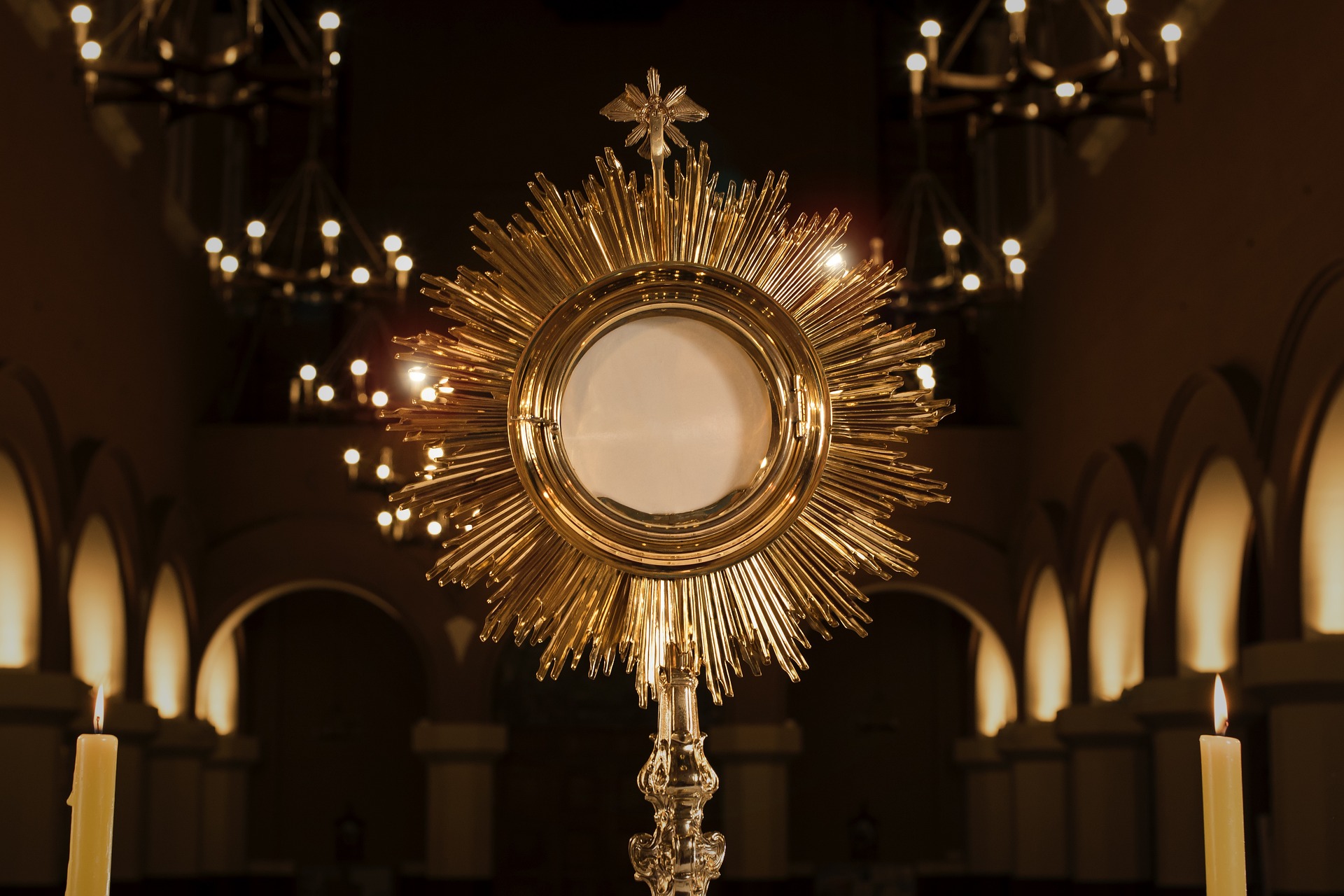
This Sunday is the solemnity of Corpus Christi, or the Body and Blood of Christ. We celebrate it every year to remind us of the fundamental doctrine of transubstantiation (i.e., that bread and wine turn into the Body and Blood of Christ). During Mass when we receive Communion, we receive the Body and Blood of Christ. Truly. When the priest holds up the host and says, “The body of Christ”, the communicant answers “Amen”. By saying “Amen”, the communicant is actually saying, “Yes, I believe that what I am about to receive is the Body of Christ”. How often do we think about that when we receive? Do we receive out of habit? Do we realise what a gift it is, something that hundreds of men and women in history fought for, many giving up their lives for it? The English Martyrs that our church is named after, for example.
This year, 74 children in our parish are preparing to receive the Eucharist for the first time. Over the last several months, we have tried to teach them what the Eucharist is, how special it is … so profoundly special that not just anyone can simply receive it because they need to understand what it is. There is a reason why it is called “communion” because you need to be in communion with the Church that Jesus Christ founded.
Anyone wishing to receive Communion must believe in the doctrine of transubstantiation. As St Paul writes, “For anyone who eats and drinks without discerning the body eats and drinks judgment upon himself” (1 Cor. 11:29). According to transubstantiation, the bread and wine are actually transformed into the actual body, blood, soul, and divinity of Christ, and only the appearances of bread and wine remain. This is why, at the Last Supper, Jesus held what appeared to be bread and wine, yet said: “This is my body . . . This is my blood” (Mark 14:22-24, cf. Luke 22:14-20).
The gift of the Eucharist is truly amazing. But in life’s hustle and bustle, we can sometimes start taking it for granted. This Sunday, let’s renew our sense of awe and gratitude in the face of this great gift. It’s not complicated; it’s just a matter of being more aware of things that we already do. For example, when we enter and leave the church, we genuflect towards the tabernacle, where the Eucharist is kept. Starting this Sunday, let’s polish up that gesture, genuflecting with a bit more purpose and care, showing true reverence and gratitude for our Saviour. And starting this Sunday, let’s remember to speak only when we need to and in a quiet tone of voice whenever we are inside a Church with the Eucharist, out of respect for Christ’s presence and out of courtesy towards those who wish to pray.
The Eucharist is Christ among us, Christ giving himself to us completely, just because he loves us. “The Eucharist builds the Church,” as Pope John Paul II said (Redemptor Hominis 20). It deepens unity with the Church, more fully assimilating us into Christ (1 Cor. 12:13; CCC 1396).