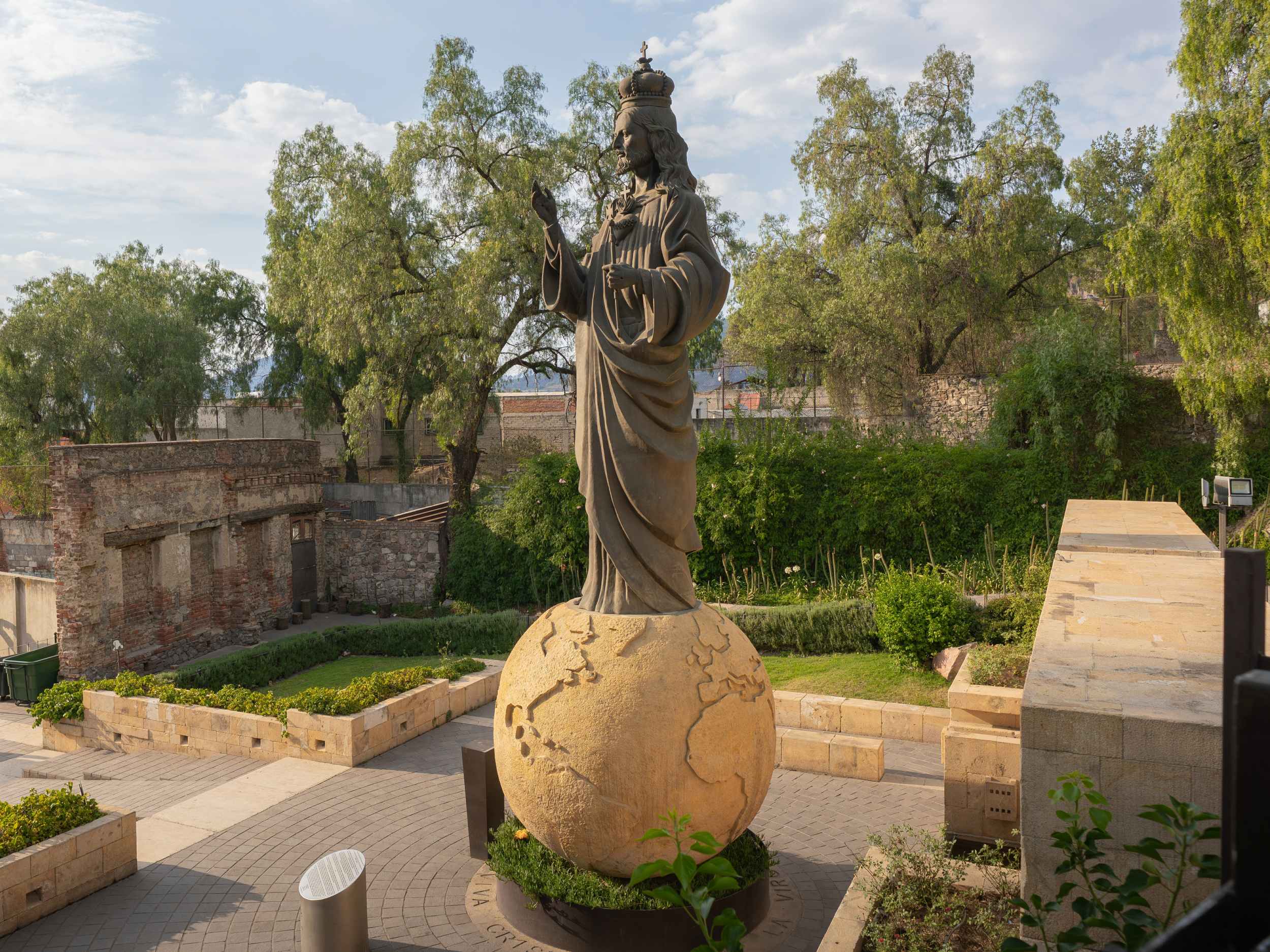

Over the past several weeks, we have heard proclamations of the eternal kingdom of God, drawing our eyes forward to what is prepared for us after this life. This Sunday, we are invited to gaze upon Christ the King, who has conquered sin and death in order to welcome us into that eternal kingdom. To further understand his kingdom, we are called to meditate on what kind of king Christ is. Our first reading gives us a glimpse of his divine kingship. Christ does not rule or govern from afar; instead, we have a shepherd-king who tends to the needs of the sheep. As our king, Christ is present to us, his people, in ways that are intentional, sacrificial, and relational. This passage reminds me of Pope Francis’ direction to a group of French priests in 2013 that they should be “shepherds with the ‘smell of the sheep’”. Christ knows and loves us intimately, and he calls us into a relationship in which we are adopted sons and daughters of the Father.
Through our baptism, we have been invited into Christ’s mission as priest, prophet, and king. By our participation in his kingship, we are charged with caring for the needs of others as Christ cares for us. In this Sunday’s Gospel, Christ describes the judgment that we will receive according to how we have cared for others. It is a judgment not meant to frighten, but to remind us of our call to love as we are loved. In our communities, our families, and as the Body of Christ in the Church, we are meant to reflect the life-giving love of the Trinity, in which there is a constant giving and receiving of love. We receive God’s love and mercy through the sacraments, and we reflect it to others by allowing his love to flow out through our lives and actions, thus extending his reign in the world.
This Sunday’s gospel forms the foundation for what the Church has named the Corporal Works of Mercy. Complemented by the Spiritual Works of Mercy (such as comforting the afflicted, praying for the living and dead, etc.), these are concrete ways that we can serve the physical and spiritual needs of our neighbours. This week, consider choosing one work of mercy to which you can dedicate your time as we approach the Advent season.