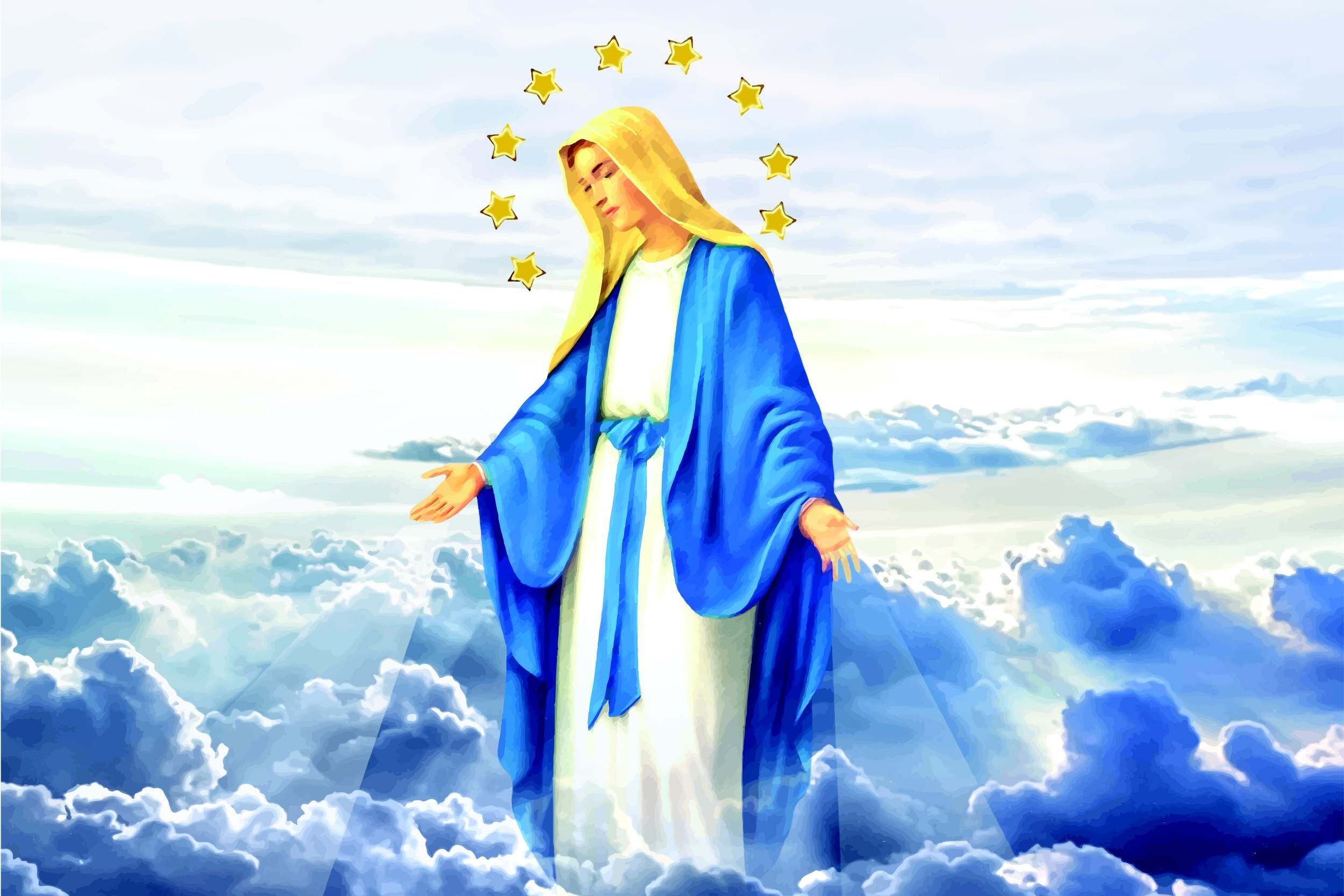
Last Sunday was the solemnity of the Assumption of the Blessed Virgin Mary. The liturgical colour was blue and Fr Antonio was even wearing a blue chasuble. Many were surprised and asked, “Why blue? I’ve never seen that before!”
In Christian art, the Virgin Mary is almost always shown wearing blue. This traditional pairing combines deep religious meaning, historical wealth, and ancient cultural symbols. In ancient times, blue came from lapis lazuli, a rare stone from Afghanistan. It was ground up to make ultramarine pigment. The vibrant paint was more expensive than gold. Renaissance artists used this precious colour only for the most important figures. Giving Mary the finest blue cloak showed her supreme honour and high status.
Blue also carries deep spiritual meaning. It is the colour of the sky and heaven. By wrapping Mary in blue, artists connected her to the divine. It showed her role as the gateway between earth and heaven. In the Bible, the colour also relates to purity and devotion. The Book of Numbers states that the Israelites should use blue cloth to cover sacred objects. Mary was seen as the ultimate holy vessel, so blue fit her perfectly. Today, this colour choice remains a powerful visual cue. It symbolises peace, hope, and grace. For centuries, the simple choice of paint created a lasting image of motherhood and divinity.